Cereulide in infant formula: a wake-up call for food safety
This article has also been published on Food Navigator Europe – read more here.
By Dr. René Floris, NIZO’s Chief Innovation Officer and Dr. Marjon Wells-Bennik, NIZO’s Principal Scientist Food Safety.
Food safety is king. Anyone in the industry will tell you that. But if there’s a lesson to learn from the recent cereulide in infant formula case, it’s that food safety threats aren’t always obvious. New ingredients and process conditions can bring new food safety risks. Potential pathogens are widespread, and some produce toxins that can outlast the organisms that create them. A thorough risk assessment is essential to understand which threats are relevant and what you need to monitor in production.
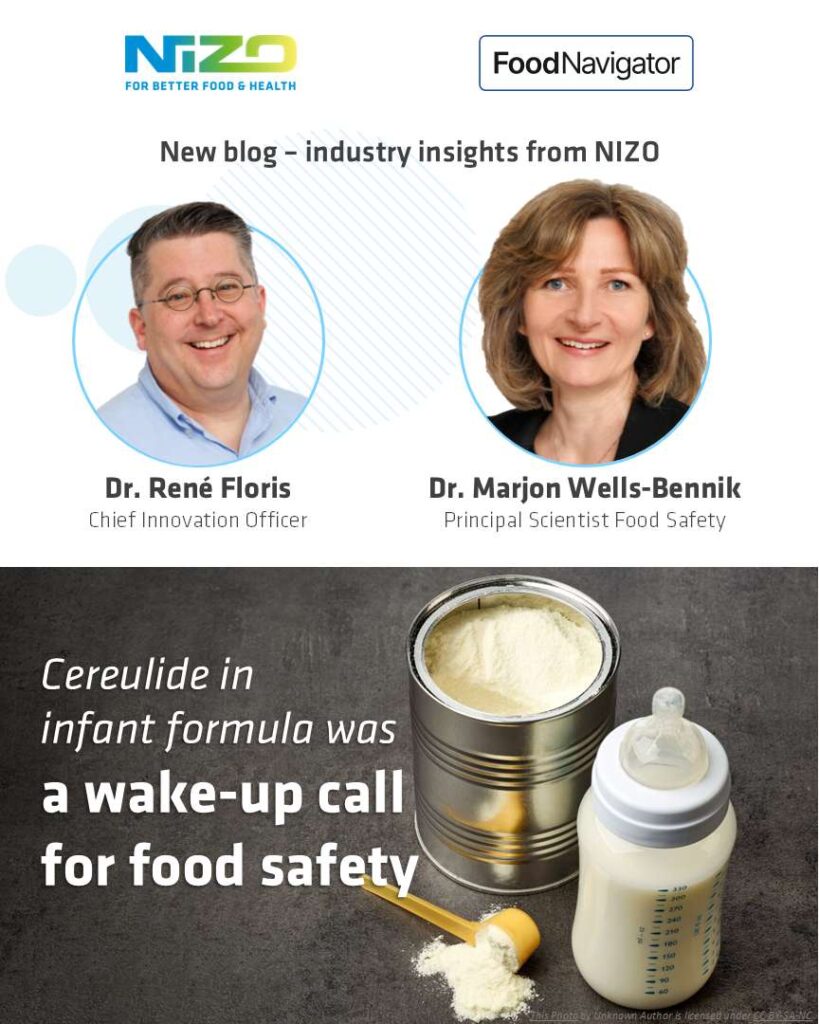
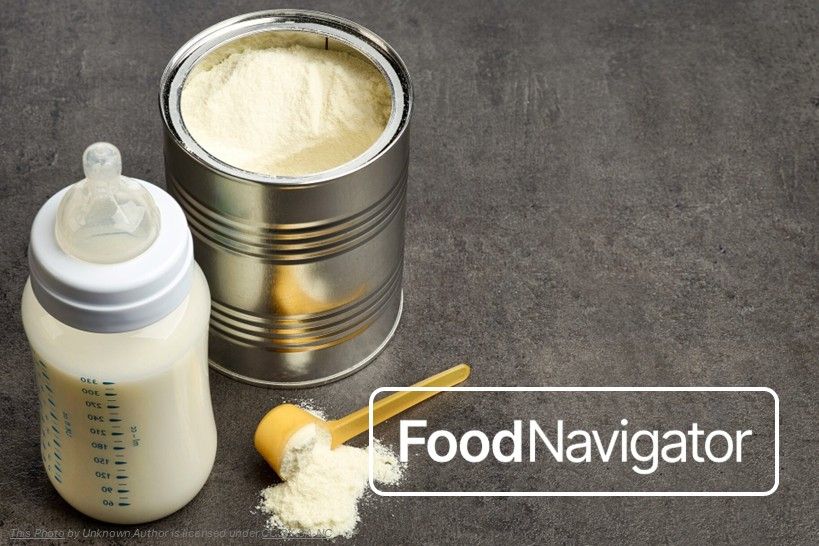
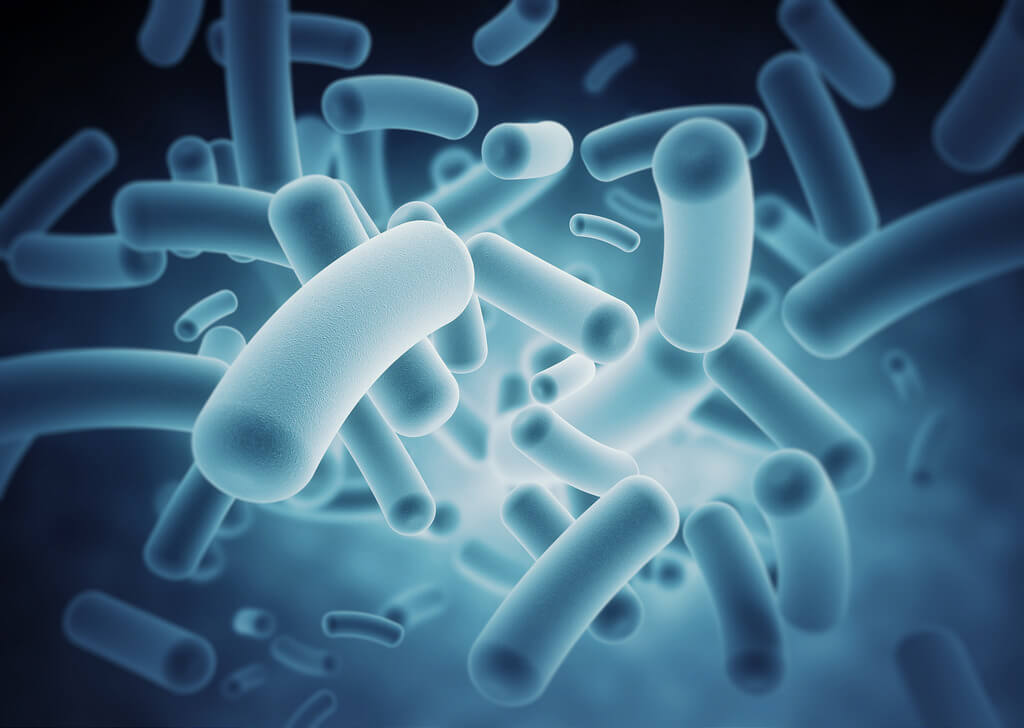
The recent recall of infant formula contaminated with cereulide made headlines globally. Cereulide is a toxin produced by some strains of Bacillus cereus. But no B. cereus was present in the recalled formula.
“It seems more likely that the bacteria grew – and produced cereulide – early in the production chain,” says Dr. Marjon Wells-Bennik, Principal Scientist Food Safety at NIZO. “The bacteria would have been removed during downstream processing, but the toxin was passed on. Being highly heat stable, it wouldn’t have been destroyed by later heat treatment processes.”
This shows just how complex food safety is today. Like many potentially pathogenic microorganisms, B. cereus can be found almost anywhere – including soil, raw materials and food production facilities. But, as in the cereulide case, although the microorganisms may be long gone, the toxins they produce can still be left behind.
The obvious answer is to test for the presence of the toxin as well as the microorganism. Again, the cereulide case highlights a challenge.
“B. cereus is unlikely to grow in formula powder or its ingredients, so testing for cereulide isn’t an obvious step,” Marjon explains. “And B. cereus isn’t the only ubiquitous microorganism that could contaminate a production chain.”
“There are pathogens like Clostridium botulinum, which produces the highly toxic botulinum toxin, and Staphylococcus aureus, which produces heat-stable staphylococcal enterotoxins (SE toxins). Then there are spoilers like B. licheniformis and B. subtilis, which create heat-stable lichenysin and surfactin respectively. That’s not to mention the numerous fungi that can produce mycotoxins. Continuously testing for all possible toxins just isn’t feasible.”
The challenge is amplified by recent trends in food production. Precision fermentation, circular ingredient streams and biomass-based processes are changing the risk profile for food safety.
Fungus-based fermentation often requires temperatures and pH levels that could allow Bacillus species to flourish. High-nutrient substrates can support rapid microbial growth after even small contamination events. And minor changes in temperature, pH or processing time – whether deliberate or accidental – could tip a process into the danger zone for unwanted microbial growth.
So, how can food and ingredient manufacturers maintain food safety? By carrying out a detailed food safety risk assessment before production begins.
That means mapping every step of the (planned) production process – from raw materials and fermentation conditions to downstream processing and storage. The goal is to understand which microbes are realistic threats, where they might grow and produce toxins, and whether those toxins could reach the final product.
Such an assessment is a multidisciplinary effort. It requires deep knowledge of organism-specific behaviour. For example, different B. cereus strains vary dramatically in their growth rates at low temperatures and how much toxin they produce.
It also takes understanding of the relevant processing technologies – including those used after production streams have been cleared of unwanted microbes. The choice of, say, how an ingredient is produced could determine whether a toxin formed by a contaminant is passed on or is discarded in the waste stream during later filtration or purification steps.
Modelling tools are invaluable here. They allow pathogen risks to be assessed based on realistic growth and inactivation kinetics, toxin-production capabilities and process variations. This helps ensure a full assessment of possible risks and avoid any nasty surprises in production.
“A comprehensive, multi-organism modelling framework provides a process-specific risk assessment that removes the guesswork from food safety,” says Marjon.
“Our food safety assessment modelling integrates process and product mapping – such as time-temperature profiles, substrate composition, pH evolution and downstream processing – with prediction of microbial inactivation and growth. It covers ten key foodborne microbial species, running them through the full process to identify which organisms can grow, survive and produce toxins, and where that could happen.”
Our food safety assessment modelling includes ten key foodborne species: eight pathogens and two spoilers.
A thorough risk assessment lets you identify the hazards and critical control points in your process – moments where conditions could tip in favour of unwanted microbial growth or toxin production. Based on that insight, you can adjust processing conditions (such as extraction or membrane filtration) and instigate appropriate monitoring and control measures to ensure toxins are not being formed.
Model-based risk assessments are the best way to identify potential threats and develop mitigation strategies. The next step – and one that is sometimes overlooked – is to verify the results. This can be done by mimicking production set-ups in the lab and introducing appropriately chosen microbial strains to track growth and, if applicable, toxin production throughout the process and finished product. Proper verification gives you confidence that your control and mitigation measures will actually work under realistic conditions.
“Choosing the right strains for verification is essential. For example, only about 5% of B. cereus strains produce cereulide – and the amount they produce varies hugely. NIZO maintains an extensive collection of microbial cultures including many cereulide-producing B. cereus strains as well as B. licheniformis, S. aureus and other relevant pathogens. By selecting the “worst-case strains” for a specific process or product, we can really see if the identified risks are under control or not,” Marjon adds.
Modern food safety is about more than just keeping microbes out of a product. You have to understand how they behave across entire processes and recognize that toxins can survive long after the organisms are gone.
New ingredients, new technologies and new production conditions are constantly reshaping risk: thorough, science‑based risk assessments can reveal the weak spots and verification shows whether your controls are truly robust.
As Marjon concludes: “The recent infant formula case may have been unusual, but it highlighted a universal truth: the threats that matter most are often the ones we don’t think to look for.”