ECOFERM Consortium Launches to Advance Sustainable Continuous Fermentation for Alternative Proteins
Ede, The Netherlands, October 1st 2026 – NIZO Food Research, BFF, DAB.bio, Vivici, dsm-firmenich and University of Applied Sciences van Hall Larenstein join forces in a new public-private research consortium, ECOFERM (Efficient COntinuous FERMentation for Alternative Proteins), launched to develop next-generation fermentation technology that can significantly improve the sustainability, productivity, and economic viability of precision fermentation.
The overall deliverable of the project is to develop and demonstrate a novel continuous fermentation approach that combines in-situ biomass retention with controlled cell agglomeration, creating a scalable production platform for high-value alternative proteins.
The transition towards more sustainable protein production is becoming increasingly important as global protein demand continues to grow. Precision fermentation is increasingly recognized as a promising route to produce proteins with a lower environmental footprint than conventional animal-based production systems. However, commercial adoption remains challenged by production costs and the substantial energy and resource requirements of current fed-batch manufacturing processes.
ECOFERM aims to address these challenges by moving beyond conventional fermentation strategies towards a continuous production model that allows microorganisms to remain in the reactor while product is continuously harvested.
Unlike traditional fed-batch processes, continuous fermentation has long been recognized as a promising alternative. It can increase productivity and reduce cost-of-goods by maximizing vessel filling and boosting reactor productivity. It reduces operational downtime associated with emptying, cleaning, filling, sterilizing and restarting production vessels. By maintaining a stable and productive microbial population over extended periods it can have a positive effect on carbon yield and reducing DSP costs.
Conventional continuous fermentation systems, such as chemostats, face important limitations. Productive microorganisms and nutrients continuously leave the reactor with the process stream, while long production campaigns can be challenged by contamination risks, genetic instability, and process performance losses. A central innovation within ECOFERM is the implementation of controlled cell agglomeration to achieve in-situ biomass retention. This enables microbial cells to remain within the bioreactor without the need for energy-intensive separation technologies such as membranes or centrifuges.
The project will use precision-fermented proteins, including beta-lactoglobulin, as representative demonstration cases to validate the technology and generate insights relevant to a broader range of fermentation-derived ingredients.
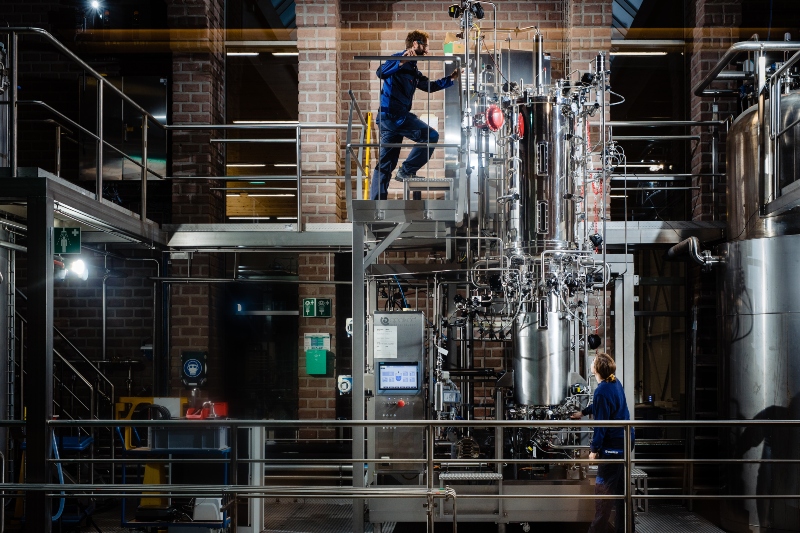
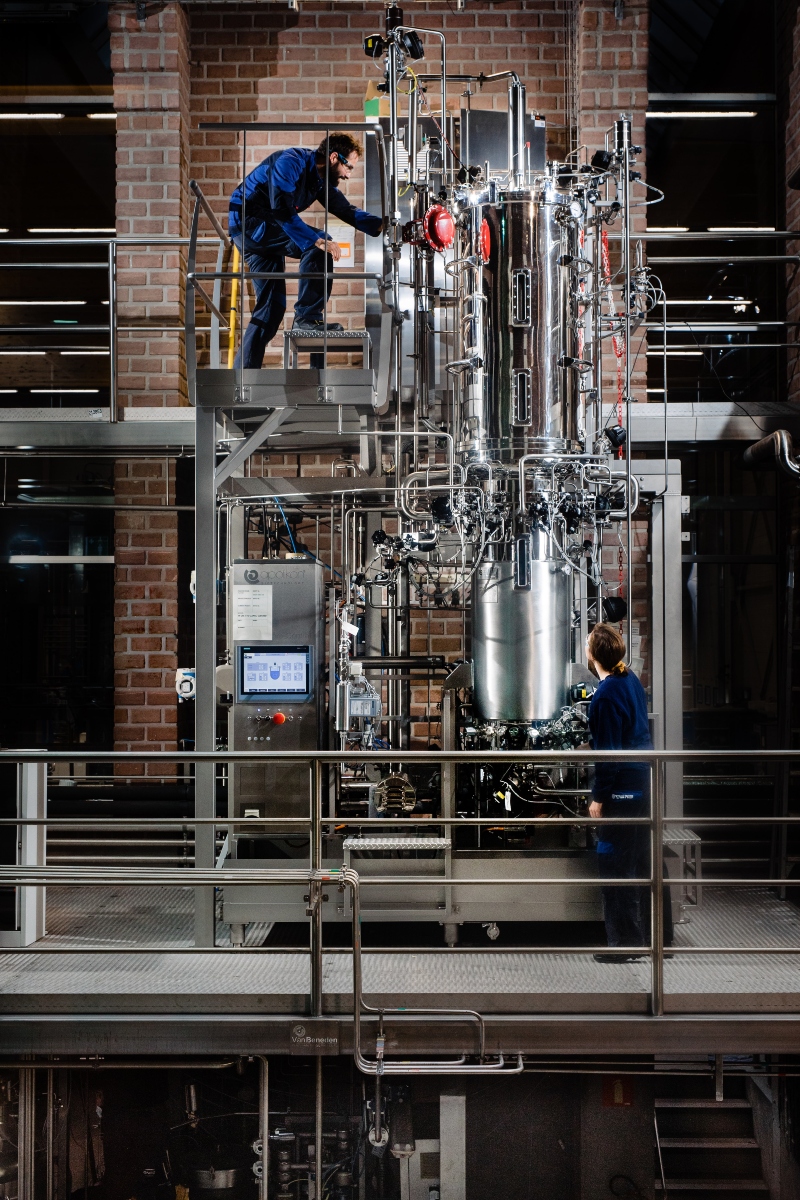
ECOFERM will investigate the biological, engineering, and operational parameters required for successful continuous fermentation. Research activities will focus on controlling and maintaining stable agglomeration behaviour and optimizing DAB.bio FAST reactor performance, understanding process robustness, and establishing strategies for industrial scale-up.
By bringing together expertise across the value chain, the consortium seeks to develop practical solutions that can accelerate the transition from laboratory-scale innovation to commercial manufacturing.
“Precision fermentation has enormous potential to contribute to a more sustainable food system, but further process innovation is needed to improve production economics,” says Project Manager Robyn Eijlander (NIZO Food Research and the BFF). “ECOFERM focuses on one of the most promising opportunities in the sector: combining continuous fermentation with efficient biomass retention to achieve higher productivity while reducing resource consumption and environmental impact.”
The outcomes of ECOFERM are expected to support the growing alternative protein sector by providing new technological capabilities for large-scale manufacturing. Beyond advancing scientific understanding, the project aims to establish a platform technology that can be applied across a range of precision fermentation products.
By reducing production costs and improving process sustainability, ECOFERM will contribute to strengthening the competitiveness of the European biotechnology and food innovation ecosystem while supporting the transition towards more sustainable protein production.
“Continuous fermentation is widely viewed as a critical next step for the maturation of precision fermentation,” says Eric van der Meer (CEO at DAB.bio). “Through this collaborative effort, we aim to generate the knowledge and demonstrate technological solutions needed to make continuous production a practical reality for the alternative protein industry.”
ECOFERM is a public-private research consortium focused on developing sustainable and cost-effective continuous fermentation technologies for precision fermentation. The project combines expertise from industry and research organizations to create scalable manufacturing solutions based on in-situ biomass retention through controlled cell agglomeration, with the goal of enabling more efficient production of alternative proteins such as beta-lactoglobulin. The project receives financial support from TKI Agri & Food (project LWV26909). Within TKI, the business sector, knowledge institutions, and the government collaborate on innovations for safe and healthy food for 9 billion people in a resilient world.